
Introduction: More Than Just a Stadium
Wembley Stadium is far more than a venue for football matches—it’s a cultural icon, a historic stage, and a symbol of national pride in the UK. From legendary sports moments to world-renowned concerts, Wembley represents a meeting point between passion and performance. Its massive arch rising over the skyline of North West London is a beacon not just for fans of sport, but for millions who’ve watched unforgettable moments unfold within its walls.
This Article offers an in-depth look at Wembley Stadium—its history, architectural marvels, cultural impact, economic significance, and its place in global sporting and entertainment heritage.
A Brief History of Wembley Stadium
The Original Wembley (1923–2000)
The first Wembley Stadium, known as the Empire Stadium, opened in 1923. Built for the British Empire Exhibition, it was not initially intended to become a permanent fixture in British sports culture. However, following the success of the 1923 FA Cup Final (dubbed the “White Horse Final” due to the image of a policeman on a white horse clearing the crowds), the venue quickly became ingrained in national identity.
Over the decades, it hosted events such as:
- 1966 FIFA World Cup Final, where England claimed their only World Cup title.
- 1948 Summer Olympics, also known as the “Austerity Games.”
- Multiple FA Cup Finals, League Cup Finals, and international matches.
The stadium’s iconic twin towers at the front entrance became its most recognizable feature, but by the late 20th century, the structure was deemed outdated and in need of significant renovation.
Demolition and Rebirth (2000–2007)
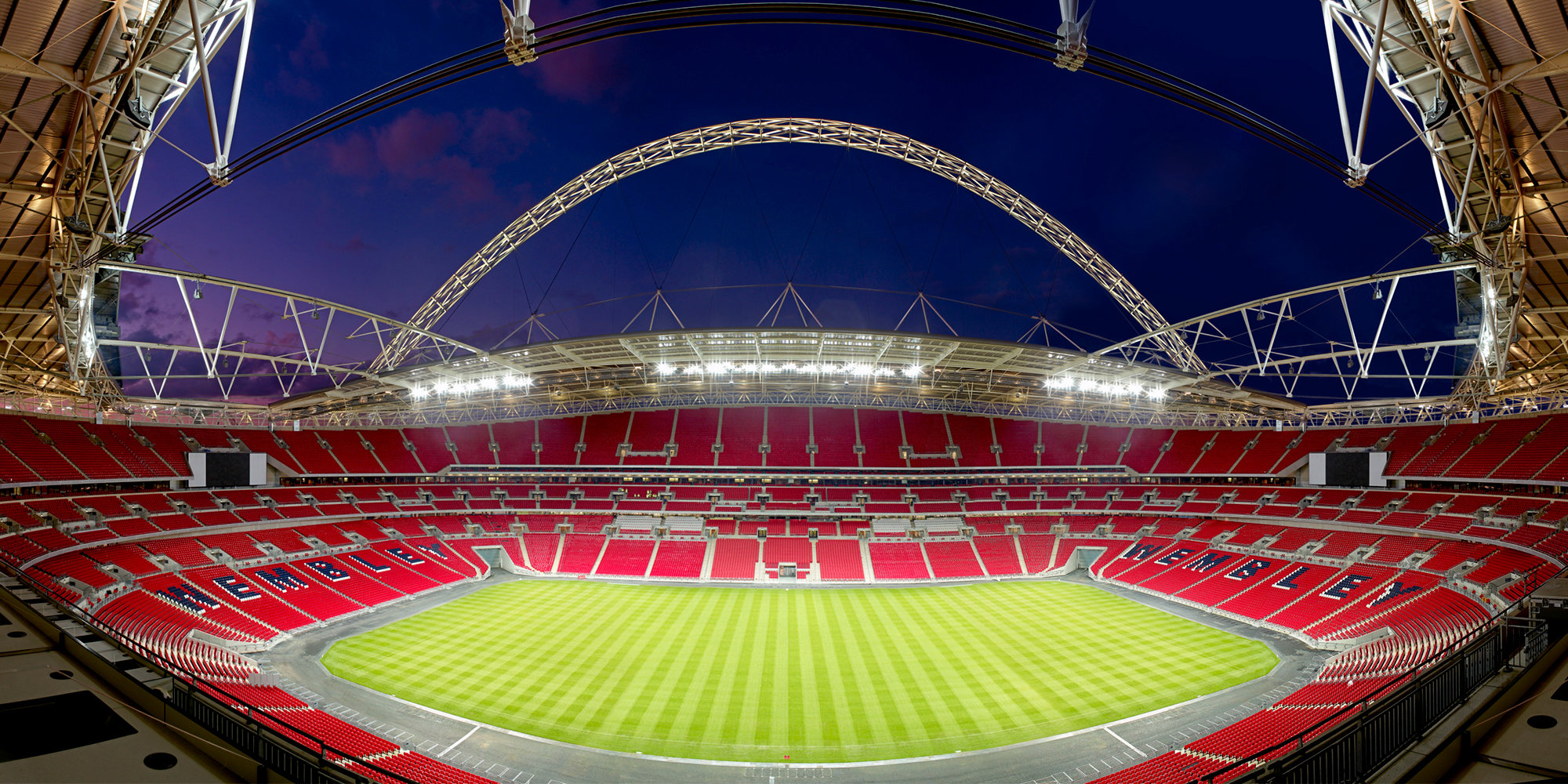
In 2000, the original stadium closed, and the twin towers were controversially demolished in 2003 to make way for the new, modern Wembley Stadium, which officially opened in 2007. Designed by Foster + Partners and HOK Sport (now Populous), the new Wembley was built on the same site and came with a Price tag of approximately £798 million, making it one of the most expensive stadiums ever built.
Architectural Marvel and Design
The modern Wembley Stadium is a feat of engineering and design. Its most striking feature is the 133-meter-high arch, which spans 315 meters and is visible across London. It not only defines the skyline but also supports more than 75% of the stadium’s roof structure, eliminating the need for internal columns and offering spectators unobstructed views.
Other key design features include:
- Seating capacity of 90,000, making it the largest stadium in the UK and the second-largest in Europe.
- Retractable roof, allowing for protection against the elements while maintaining natural turf conditions.
- Bowl design, ensuring maximum atmosphere and acoustics.
- 42-kilometer circumference of cabling to support broadcasting, LED lighting, and digital infrastructure.
Wembley Stadium’s Role in Football
The Home of English Football
Wembley is often referred to as “The Home of Football”, and for good reason. It serves as the national stadium for the England national football team and hosts the Country’s most prestigious domestic fixtures, including:
- The FA Cup Final
- The Carabao Cup Final
- The FA Community Shield
- Playoff Finals for all EFL divisions
Additionally, the stadium has hosted major international tournaments such as:
- UEFA Euro 1996
- UEFA Euro 2020 (rescheduled to 2021), including the semi-finals and final.
- Scheduled to be one of the primary venues for UEFA Euro 2028.
Champions League and Club Matches
Wembley has also hosted UEFA Champions League Finals in 2011 and 2013, with FC Barcelona and Bayern Munich claiming victories, respectively. The stadium is set to host the final again in 2024, reinforcing its global stature.
Wembley Beyond Football
Rugby, NFL, and Boxing
Though rooted in football tradition, Wembley Stadium serves as a multi-sport venue. It has hosted high-profile rugby league and rugby union matches, including the Challenge Cup Final. The NFL International Series brought American football to British audiences at Wembley before it moved to Tottenham Hotspur Stadium.
In boxing, Wembley made headlines with events like:
- Anthony Joshua vs. Wladimir Klitschko (2017), with over 90,000 in attendance.
- Tyson Fury vs. Dillian Whyte (2022), showcasing its flexibility and scale.
Music and Live Entertainment
Wembley Stadium is also a coveted stage for global music superstars. The venue’s acoustics and capacity make it ideal for large-scale concerts. Legendary performances include:
- Live Aid (1985) – One of the most iconic charity concerts in history.
- Tours by Queen, Michael Jackson, Madonna, Beyoncé, Ed Sheeran, and Taylor Swift.
- Multi-night residencies by bands like Coldplay and U2.
These events not only attract global attention but also contribute significantly to London’s economy through tourism, hospitality, and entertainment.
Table: Major Events Hosted at Wembley Stadium
| Year | Event | Type | Attendance |
| 1966 | FIFA World Cup Final | Football | 96,924 |
| 1985 | Live Aid | Concert | 72,000+ |
| 2011 | UEFA Champions League Final | Football | 86,600 |
| 2012 | Olympic Football Final | Multi-sport | 86,162 |
| 2017 | Anthony Joshua vs. Klitschko | Boxing | 90,000+ |
| 2022 | UEFA Women’s Euro Final | Women’s Football | 87,192 (record) |
| 2023 | Taylor Swift “Eras Tour” | Concert | ~88,000/night |
Economic and Cultural Impact
The economic footprint of Wembley Stadium extends far beyond ticket sales. Its presence drives massive revenue streams through broadcasting rights, sponsorships, hospitality, merchandising, and tourism. On major event days, the surrounding area—including local pubs, restaurants, hotels, and retailers—experiences a boom in customer flow. Transport networks adapt to handle the influx, and thousands of temporary jobs are created. Yet beyond the numbers lies the actual cultural value of Wembley Stadium: it is a place where collective memory is shaped. Whether it’s the national anthem before a football final, the emotional charge of a comeback victory, or the communal euphoria of 80,000 people singing along to a favorite artist’s chorus, Wembley becomes a shared space of experience and identity. It’s where the ordinary meets the extraordinary, where grassroots dreams are fulfilled on a global stage. For generations of fans, athletes, and performers, standing on the pitch or stage at Wembley is the realization of a lifelong dream. This power of place—emotional, cultural, and symbolic—is what sets Wembley apart from other arenas. It is not just where events happen; it is where history is made.
Challenges and Controversies
While widely admired, Wembley Stadium has not been free from criticism and controversy. Some key issues include:
- Cost overruns: The final construction cost was significantly higher than initially estimated.
- Pitch quality: The early years of the new stadium were marred by complaints over the condition of the pitch, which was relaid multiple times.
- Traffic and accessibility: Despite strong public transport links, event-day congestion remains a persistent challenge.
- Ownership and funding: The Football Association (FA) considered selling the stadium in 2018 to fund grassroots football, a move that sparked national debate before ultimately being abandoned.
Despite these hurdles, Wembley has maintained its prestige and continued to draw record-breaking crowds.
Sustainability and Future Developments
As global attention shifts toward sustainability, Wembley Stadium has taken steps to reduce its environmental impact:
- Recycling programs and waste reduction initiatives.
- Energy-efficient lighting and water systems.
- Integration of public transport access to reduce carbon emissions.
Future developments include further digitalization of fan experiences, expanded hospitality offerings, and continued upgrades to maintain world-class standards.
Wembley in Popular Culture
Wembley Stadium’s influence extends into film, television, music videos, and literature. It has appeared in:
- The movie Bohemian Rhapsody (2018), which recreated Queen’s Live Aid performance.
- Documentaries about major sporting events and musicians.
- Countless music videos, tour announcements, and fan vlogs.
Its name is synonymous with grandeur, and references to “playing Wembley” in music often symbolize an artist’s ultimate arrival.
Conclusion: Wembley Stadium as a Living Monument
Wembley Stadium is not just a structure of steel, concrete, and seats—it’s a living monument to the power of collective experience. It encapsulates the spirit of competition, the emotion of music, and the unity of large-scale events. Whether you’re a lifelong football supporter, a die-hard concertgoer, or a visitor seeking a piece of modern British culture, Wembley offers a stage where memory and meaning intertwine.From its humble beginnings in the early 20th century to its place today as one of the world’s premier venues, Wembley Stadium has evolved, but its soul remains rooted in its ability to bring people together. And as the years go by, one thing is sure: Wembley will continue to be the place where legends are born.