
Hong Kong is one of the densest and most vertically built cities on Earth. In this metropolis, life unfolds inside towering high-rises, narrow alleys, century-old tenement blocks, and hyper-modern skyscrapers often standing shoulder to shoulder. While the city is known for its efficiency, energy, and breathtaking skyline, it also faces a quieter, more persistent threat: fire hazards arising from density, aging buildings, subdivided flats, and complex urban logistics.
The term “Hong Kong fire” doesn’t refer to a single incident; instead, it has become a broad reference encompassing a series of deadly fires throughout the city’s history, each revealing structural weaknesses and social issues that persist today.
This article provides a deep, comprehensive exploration of the Hong Kong fire problem—its historical context, causes, case studies, emergency response structure, socioeconomic implications, policy reforms, and the future of fire safety in one of the most tightly packed cities in the world.
The Historical Landscape of Fire in Hong Kong
Fire hazards have existed in Hong Kong since urban construction began, but the scale, frequency, and deadly impact became more visible as the city expanded rapidly after World War II. Tens of thousands of people lived in makeshift hillside squatter villages during the 1950s and 1960s, and due to the use of flammable materials such as wood, tar paper, and sheet metal, these settlements were tinderboxes waiting for a spark.
One of the earliest and most catastrophic incidents was the Shek Kip Mei fire of 1953, which left more than 50,000 people homeless. This blaze reshaped the city’s trajectory; in response, the Hong Kong government committed to building public housing on a massive scale. Ironically, while the Shek Kip Mei tragedy alleviated some fire hazards by moving people into concrete structures, it also marked the beginning of the crowded high-rise environments that would become the backdrop for future fire incidents.
Throughout the 1970s and 1980s, fires in densely populated districts such as Sham Shui Po, Yau Ma Tei, Mong Kok, and Wan Chai continued to expose challenges, including narrow escape routes, cluttered corridors, illegal alterations to buildings, and insufficient sprinkler systems. Even as Hong Kong entered the 21st century as a global financial center, infrastructure aged, building regulations lagged behind modern requirements, and subdivided flats proliferated—creating new layers of risks.
Why Hong Kong Fires Are Particularly Dangerous
Fire risks exist everywhere, but Hong Kong’s unique urban, social, and architectural characteristics amplify the danger. Several key factors make the typical Hong Kong fire especially hazardous and challenging to manage.
1. Hyper-Density and Vertical Living
Hong Kong’s average urban density is among the highest in the world. Buildings often exceed 30–40 stories, and many older blocks lack modern fireproofing systems. The vertical nature of these structures means fires spread quickly through stairwells, ducts, or improperly maintained electrical shafts.
2. Aging Building Stock
Nearly half of the city’s buildings are over 40 years old. Many high-rises built in the 1960s–1980s were not originally designed with contemporary fire safety standards in mind. Problems include:
- outdated wiring
- narrow or blocked corridors
- insufficient sprinklers
- inadequate fire doors
- poorly maintained alarm systems
3. Subdivided Units (SDUs)
Hong Kong’s housing shortage has led to the creation of tens of thousands of subdivided flats, where an original apartment is partitioned into multiple tiny rooms. These SDUs often have:
- Illegal electrical wiring
- flammable partition walls
- few or no windows
- single shared exits
- blocked stairwells
Fires in these structures can trap occupants within seconds.
4. Congested Streets and Emergency Access Issues
Many fire incidents occur in older districts with narrow lanes, where fire engines struggle to maneuver. Street markets, double-parked vehicles, and temporary structures can slow down response time—sometimes fatally.
5. Cultural and Commercial Drivers
Hong Kong’s bustling nightlife districts—like Yau Ma Tei, Mong Kok, and Lan Kwai Fong—contain bars, guesthouses, mahjong parlors, and restaurants stacked inside old buildings. These businesses often store combustible materials or operate hot kitchens in cramped quarters.
Major Fire Incidents That Shaped Hong Kong’s Modern Policies
While fires occur every year, several tragedies stand out due to their death toll, media coverage, and influence on public policy.
The Garley Building Fire (1996)
The Garley Building fire remains one of the deadliest high-rise fires in Hong Kong’s recent history. During elevator renovations, sparks ignited flammable materials in the lift shaft. The blaze shot upward through the 16-story building, trapping workers and office occupants.
The tragedy exposed:
- Non-functional sprinkler systems
- illegal alterations
- inadequate emergency training
- vulnerability of mid-rise office towers
This fire led to a review of fire codes for commercial buildings and the establishment of more rigorous guidelines for renovation work.
The Fa Yuen Street Fire (2011)
This fire, which occurred in one of the busiest market districts, swept through hawker stalls and then spread into residential buildings. Illegal storage, cluttered corridors, and dense market structures all contributed to the rapid growth of the flames.
It resulted in:
- 9 deaths
- more than 30 injuries
- a major reform of street market safety policy
The Yau Ma Tei Fire (2020)
A horrific blaze broke out during a birthday party inside a Nepalese religious center located in an old tenement building. The unit had a single exit and no sprinkler system. The crowded, subdivided interior turned into a death trap.
This incident reignited public debate about:
- Safety of ethnic minority enclaves
- lack of regulation for community centers in old buildings
- The dangers of substandard housing
Table: Key Characteristics of Major Hong Kong Fire Incidents
| Incident | Year | Location | Primary Causes | Casualties | Key Takeaways |
| Shek Kip Mei Fire | 1953 | Kowloon | Flammable squatter huts | 0 deaths, 50,000 homeless | Led to the birth of the public housing system |
| Garley Building Fire | 1996 | Tsim Sha Tsui | Renovation sparks, flammable lift shaft materials | 41 deaths | Major overhaul of commercial fire codes |
| Fa Yuen Street Fire | 2011 | Mong Kok | Street market clutter, illegal storage | 9 deaths | Market safety reforms |
| Yau Ma Tei Fire | 2020 | Yau Ma Tei | Overcrowded unit, poor escape routes | 7 deaths | Renewed scrutiny on subdivided flats |
How the Hong Kong Fire Services Department Responds
The Hong Kong Fire Services Department (HKFSD) is widely respected for its professionalism and rapid response capabilities. With over 10,000 personnel, including firefighters, paramedics, and emergency specialists, the HKFSD manages an enormous volume of calls in one of the world’s busiest cities.
1. Response Time
HKFSD maintains remarkably fast response times:
- 6 minutes for urban centers
- 9–23 minutes for outlying islands or remote areas
2. Equipment and Technology
Modernization efforts include:
- Thermal imaging cameras
- aero-ladders for high-rise rescues
- breathing apparatus systems
- integrated digital command platforms
- Drones for reconnaissance in high-rise fires
3. Specialized Units
HKFSD operates teams dedicated to:
- high-angle rescue
- hazardous materials
- marine firefighting
- ambulance services
- collapse search and rescue
4. Public Education
Programs teach residents about:
- Escape route planning
- kitchen fire prevention
- electrical safety
- fire extinguisher use
These efforts help reduce death rates but are limited by the realities of housing conditions that make fires inherently more dangerous.
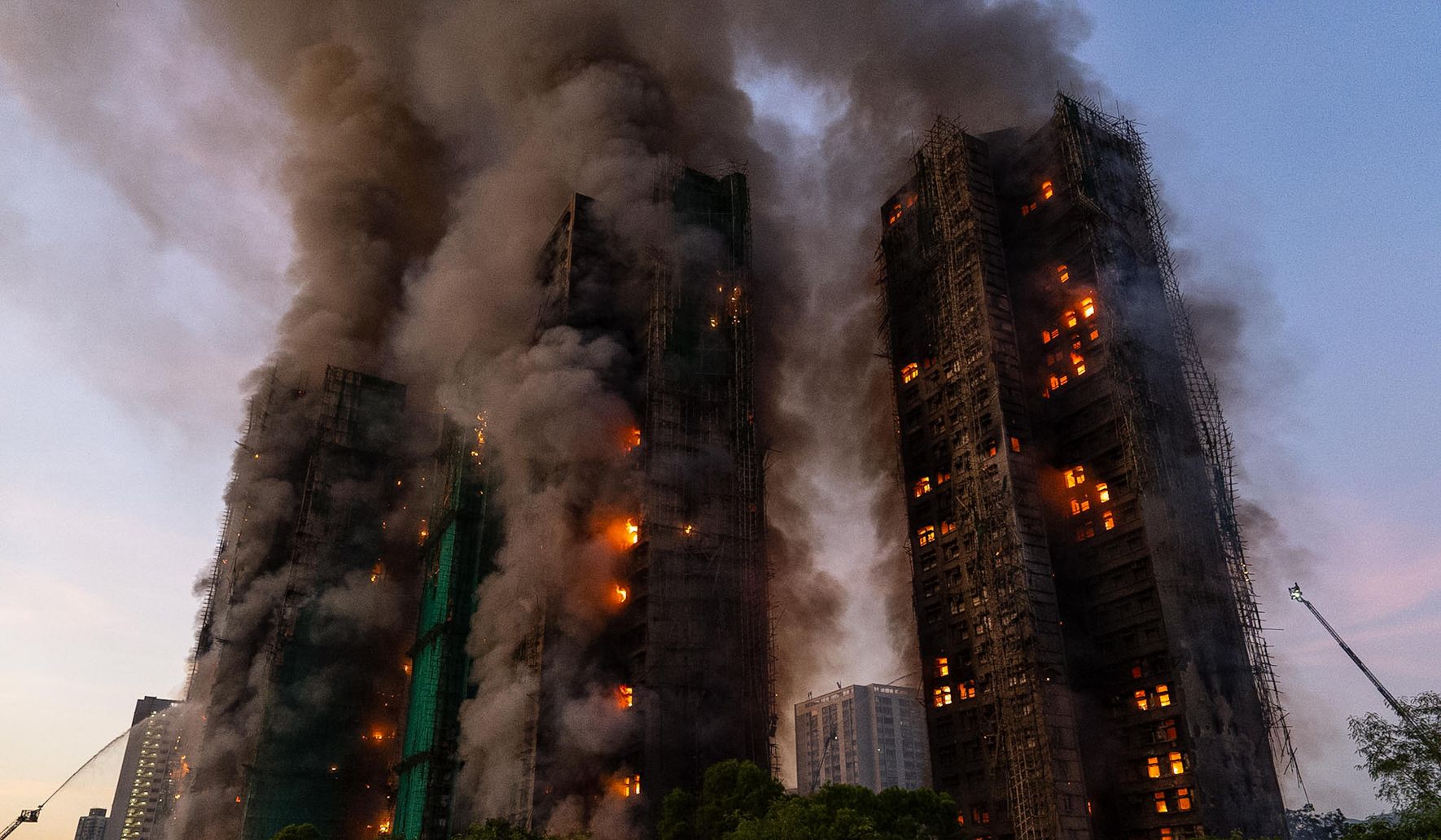
Fire Hazards Unique to Hong Kong’s Urban Fabric
Subdivided Units (SDUs) and Cage Homes
Hong Kong’s housing crisis forces many low-income residents to live in subdivided flats or cage homes—units often as small as 2–5 square meters. The layout creates micro-mazes inside apartments, with multiple families sharing:
- A single entrance
- a single kitchen
- improvised electrical outlets
When fire breaks out, residents can be trapped in seconds.
Old Tenement Buildings (Tong Lau)
Found mainly in Kowloon, these early-20th-century buildings feature:
- timber staircases
- narrow corridors
- illegal rooftop structures
- cluttered balconies
Some lack functioning fire alarms, and many have never undergone full retrofitting.
Street Markets and Alley Kitchens
Hawker stalls, night markets, and small family eateries often use deep fryers, propane tanks, and open flames—sometimes without adequate spacing or ventilation.
Rooftop Additions
Unofficial rooftop dwellings exist across older districts, creating:
- Extra electrical load
- obstructed escape routes
- dangerous extensions made from flammable materials
All these conditions amplify the impact of any Hong Kong fire, often turning a small spark into a major incident.
Social and Economic Factors Intertwined with Fire Risks
Fire hazards in Hong Kong cannot be separated from housing inequality, urban density, and socioeconomic disparity.
Affordable Housing Shortages
Over 200,000 people are estimated to live in subdivided units because affordable alternatives are inaccessible. These units are often the least well-protected against fire.
Elderly Residents in Old Buildings
A significant portion of low-income elderly citizens reside in aging tenement blocks with limited mobility, making evacuation difficult.
Ethnic Minority Communities
Many Nepalese, Pakistani, and Indian families live in older districts with high fire risks. Language barriers sometimes hinder the dissemination of safety information.
Commercial Pressure
High rents force small businesses to:
- Store goods in corridors
- overload electrical circuits
- Operate inside older, cheaper buildings.
Such conditions create fertile ground for devastating fires.
Government Reforms and Regulatory Changes
The Hong Kong government has implemented various policies to reduce the frequency and severity of fires.
1. Fire Safety (Buildings) Ordinance
This law requires older commercial and composite buildings to upgrade:
- sprinkler systems
- fire-resistant walls
- emergency lighting
- fire alarm controls
However, enforcement has been slow due to ownership disputes, financial burdens, and logistical constraints.
2. Subsidy Schemes
Programs exist to help building owners:
- install sprinklers
- Replace fire doors
- clear unauthorized structures
- Upgrade electrical systems
Yet many low-income residents cannot afford their share of renovation costs.
3. Regulation of Subdivided Flats
While some inspections occur, illegal units remain widespread because eliminating them would worsen the housing crisis without providing alternatives.
4. Street Market Reforms
After the Fa Yuen Street disaster, authorities:
- Reconfigured stall layouts
- banned storage of flammable items
- widened fire-service access lanes
Case Study: Lessons from a Hypothetical Modern Hong Kong Fire
Imagine a typical evening in Mong Kok. Residents cook dinner inside subdivided flats. Outside, neon signs flicker over a dense market. At 8:37 PM, an overloaded extension cord in a subdivided unit sparks. Flames climb the partition wall, made of thin plywood.
Within 60 seconds:
- Smoke fills multiple small units.
- The shared corridor becomes impassable.
- Neighbors panic and call emergency services.
By the time firefighters arrive—despite a rapid response—smoke has travelled through the stairwell of the 60-year-old building. Several residents are trapped in their units with no balconies.
This scenario is entirely plausible and mirrors past tragedies.
Technological Innovations for Fire Prevention
Advancements could reduce the frequency of fire disasters in Hong Kong.
1. Smart Smoke Detectors
WiFi-enabled units can alert residents via smartphone and automatically notify emergency services.
2. AI Monitoring Systems
AI can detect:
- Unusual heat signatures
- electrical overloads
- smoke patterns
- early ignition sources
3. Fire-Resistant Interior Materials
Lightweight, fire-retardant partitions can replace plywood in subdivided units.
4. Drone-Aided Inspections
Drones can survey building exteriors, roofs, and illegal structures faster and more safely than manual inspections.
What Residents Can Do to Protect Themselves
Despite systemic challenges, residents can take steps to reduce risks.
1. Clear Corridors
Remove clutter or stored items that can obstruct escape routes.
2. Use Electrical Appliances Safely
Avoid:
- Overloaded extension cords
- cheap chargers
- daisy-chained socket boards
3. Install Basic Safety Equipment
Every household should have:
- A smoke alarm
- a small fire extinguisher
- a fire blanket
4. Plan an Escape Route
Families should know:
- Primary and secondary exits
- How to stay low during smoke events
- where to meet outside the building
The Future of Fire Safety in Hong Kong
Hong Kong’s government, civil society, and residents must work together to address long-standing vulnerabilities. Key long-term strategies include:
1. Comprehensive Building Revitalization
Older tenement buildings need:
- Full electrical rewiring
- modern sprinkler systems
- new fire-resistant stairwells
- compulsory structural upgrades
2. Reformed Housing Policies
To reduce reliance on subdivided flats, the city must:
- Expand public housing
- Accelerate redevelopment projects
- Promote modular construction
- Regulate substandard rentals more effectively.
3. Urban Planning Improvements
Future districts must account for emergency access and distance between commercial and residential spaces.
4. Greater Support for Vulnerable Populations
Language-accessible safety programs, subsidies for upgrades, and community-center inspections are essential.
Conclusion: Toward a Safer, More Resilient Hong Kong
The phrase “Hong Kong fire” represents more than a series of tragic events. It reflects the complex interplay of dense urban living, aging buildings, social inequality, and economic pressures. While the city has made substantial progress, fires continue to expose weaknesses in housing policy, infrastructure management, and regulatory enforcement.
Hong Kong remains a world-class metropolis, but its resilience depends on addressing the root causes of fire hazards—not merely responding to them. Through a combination of modern technology, government reform, community vigilance, and long-term urban planning, Hong Kong can continue to reduce fire risks and protect the lives of those who call this vertical city home.