
Introduction
Halogen heater. In the world of home heating solutions, there’s one option that often slips under the radar despite offering a compelling combination of efficiency, instant warmth, and sleek design—the halogen heater. Designed around halogen infrared technology, these heaters are lightweight, often compact, and deliver focused radiant heat to the user or objects in view.
In this article, we’ll explore what a halogen heater is, how it works, its advantages and limitations, safety considerations, types and features, where and how to use it effectively, how to maintain it, and tips for getting the most out of your purchase.
What Is a Halogen Heater?
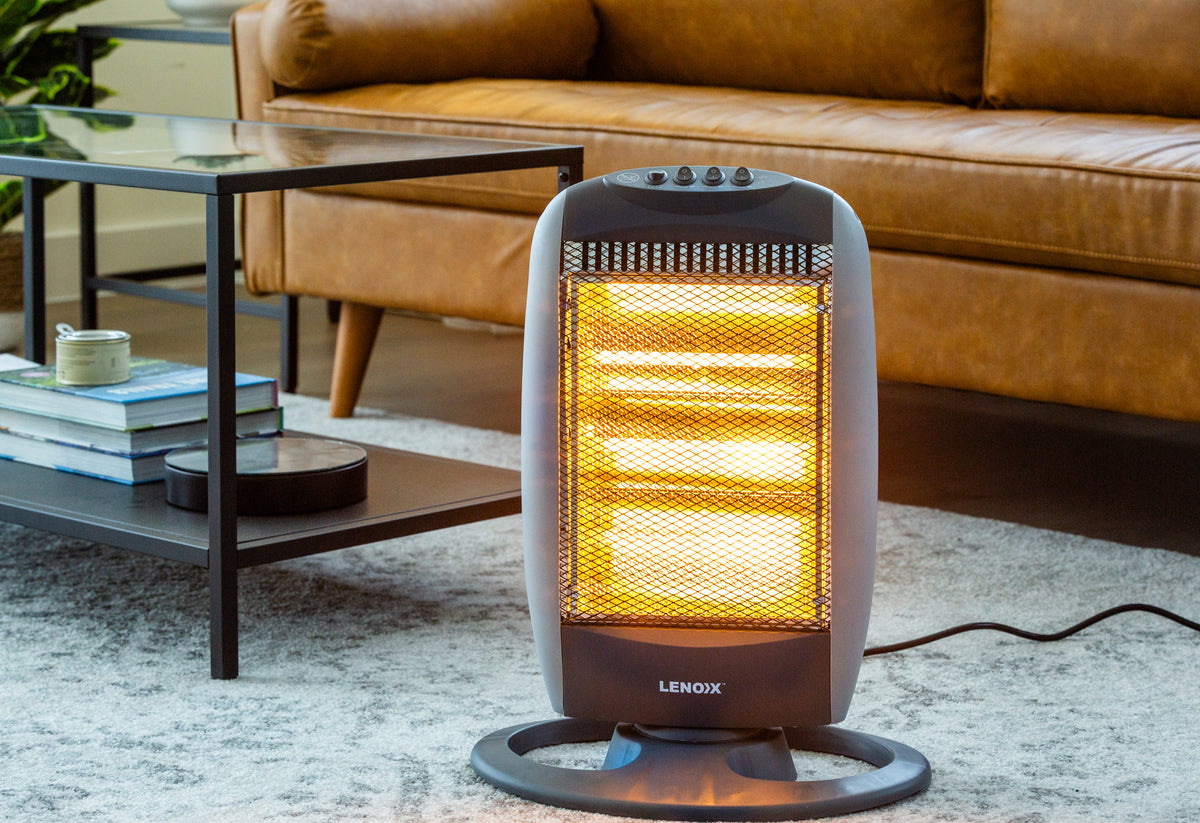
A halogen heater is a type of radiant space heater that uses halogen-filled quartz tubes as heating elements. A halogen lamp produces infrared radiation when an electric current passes through the filament inside the quartz tube, warming up the visible area almost immediately. These heaters don’t rely on convection (heating air), but on radiant heat—warming objects and people directly in its path.
Key Components
- Halogen-filled quartz tube: The core heating element, enclosed in quartz for quick heat output.
- Reflective housing or cone: Usually aluminium or polished metal, directing the infrared rays outward.
- Electric controls: Basic on/off switches, thermostatic dials, or remote control systems, depending on the model.
- Safety features: Some include tip-over switches, overheat cut-offs, and cool-touch housings.
How Halogen Heaters Work
Halogen heaters operate using infrared radiation, which transfers heat differently from conventional heating. Instead of heating the air, the warm rays travel in straight lines from the halogen tubes. When they hit a surface or person, the absorbed energy raises the temperature directly.
This results in instant warming, with little to no delay between turning the unit on and feeling heat. Additionally, because air isn’t being heated, there’s less heat loss from drafts and open doors—offering better efficiency in many situations.
Advantages of Halogen Heaters
1. Instant Warmth
Unlike convection heaters that heat the surrounding air slowly, halogen units emit infrared radiation immediately, delivering almost instantaneous warmth.
2. Energy Efficiency (on‑demand)
Because they don’t waste energy heating the entire room, they can be exceptionally efficient when you only need localized warmth for a short period.
3. Quiet and Flicker-Free Operation
There’s no fan or blower, making them virtually noise-free. Modern designs also emit a soft, gentle glow—flicker-free and less intrusive.
4. Compact and Portable
Many models are lightweight and feature handles or stands. Some can be wall-mounted or free-standing, depending on your space.
5. Low Maintenance
Halogen tubes last thousands of hours and generally require minimal upkeep—no filters or fluids to replace.
6. Directional Heat
They let you aim heat exactly where it’s needed, making them ideal for workspaces, patios, bathrooms, or personal zones.
Limitations and Considerations
While halogen heaters have plenty of benefits, it’s essential to understand their limitations:
- Limited range: Their radiant heat typically doesn’t travel far (maybe 2–3 meters of adequate warmth), so they’re not ideal for heating large, open areas.
- Line-of-sight required: Warmth only reaches zones not blocked by furniture or partitions.
- Lack of ambient warmth: The air temperature in the room may remain cool even when surfaces feel warm.
- Potential glare or bright light: Though many models use low‑glare bulbs, the visible glow might be uncomfortable for some users.
- Not always cost-effective long-term: Running cost depends on the price per kilowatt-hour. Use for short intervals to save energy.
- Safety risks: As with any electric heater, there’s a risk of burns or fire if left near flammable materials. Safety features are crucial.
Table: Key Features & Comparison of Halogen Heaters
Below is a table that offers a long paragraph under the “Detailed Description” column to give a deeper look at each feature:
| Feature | Importance | Detailed Description |
| Instant Heat | High | One of the most appealing traits of a halogen heater is its rapid warm‑up time. Once the power is switched on, the halogen-infused quartz element begins glowing and emitting infrared rays almost immediately. This means you don’t waste time waiting for warm air; the moment it’s turned on, you feel radiant heat. For quick spot heating—such as at a home office desk, bathroom mirror, or bedside—these units’ immediacy of warmth makes them both convenient and efficient. |
| Energy Efficiency | Moderate (for short usage) | Because the heater only warms what it directly contacts, and not the surrounding air, energy is not wasted warming unused space. This can be economical when employed for short tasks or spot heating. However, over longer hours, especially in more enclosed or large rooms, the running cost may approach that of convection models. |
| Design & Portability | High | Most halogen heaters are designed to be compact and lightweight, with handles, stands, or wall-mount options. Their minimal footprint means they can sit unobtrusively on a shelf, under a desk, or near a work area. You can pivot or direct the bar so that it points exactly where needed, and store it easily when not in use. |
| Safety Features | Critical | Despite the visible glowing element, reputable models incorporate tip-over switches, overheat sensors, and cool-touch housing designs to minimize risk. Users must still observe safe distances—keep away from curtains, paper, and soft fabrics—and ensure the heater is placed on a secure, flat surface. |
| Noise Level | Very low | Because there’s no fan, the operation is silent, making halogen heaters excellent for bedrooms, libraries, or any quiet space. Even the slightest hum can prove bothersome in settings that demand silence, but halogen units tend to be virtually whisper‑quiet. |
| Lifespan | Long (in hours) | A typical halogen bulb inside these heaters lasts several thousand hours before performance drops. When the time comes for replacement, tubes are often affordable and easy to replace, much like replacing a regular light bulb. However, specific tube size and wattage must match the unit’s specifications. |
Types of Halogen Heaters
Halogen heaters come in various forms to suit different needs:
1. Portable Infrared Halogen Heaters
These are small, lightweight units—often bar-shaped or upright—designed for personal or tabletop use. Many come with a stand and swivel adjustment. Perfect for home or small office situations.
2. Wall‑Mounted Models
Larger units that can be affixed to a wall, typically in bathrooms, patios, or living rooms. These act more like infrared panels, offering broader coverage from above. Commonly used outdoors or in semi-outdoor areas.
3. Tower or Column Units
These stand tall (think 2–4 feet high), giving a greater vertical range. Some combine halogen and fan elements to circulate warm air, along with a slight amount of radiant heat.
Where Halogen Heaters Work Best
Office Desks & Workstations
The quick burst of warmth directly at your workstation reduces the need to heat the entire room—great for chilly mornings or cold offices.
Garages, Workshops & Sheds
These often lack central heating. A focused halogen heater provides instant comfort while you’re working on projects.
Bathrooms & Dressing Areas
They warm you directly, letting you stay comfortable without waiting for the air temperature to rise.
Outdoor Covered Patios, Balconies & Gazebos
Especially wall- or ceiling-mounted units are ideal here—they fend off chill during evening relaxation or casual gatherings.
Bedrooms & Small Living Spaces
Used briefly before bedtime or during TV time, they can eliminate drafts around feet and torso—but make sure safety features are robust.
Safety Tips for Using Halogen Heaters
- Distance Matters: Always keep the heater at least 3 feet (around 1 meter) from flammable materials.
- Never Leave Unattended: Turn it off whenever leaving the room or going to sleep (even if it has tip-over protection).
- Secure Placement: Set it on a stable, flat surface, or mount it securely according to the manufacturer’s instructions.
- Regular Cleaning: Dust buildup on reflective surfaces or tubes may diminish efficiency. Clean gently after turning it off and unplugging.
- Check for Wear: Inspect power cords and tubes periodically. Replace if there are cracks or discolouration.
- Use Safety‑Designed Models: Prefer ones with tip-over and overheat cut-offs.
- Keep Away from Water: Don’t use near bathtubs or sinks unless rated explicitly for bathroom use.
Maintenance and Replacement
Maintain your halogen heater’s efficiency with simple upkeep:
- Dust Regularly: Once the unit is cool, wipe the exterior and reflector with a soft, dry cloth. Avoid abrasive cleaners.
- Inspect Tubes: If the quartz becomes cloudy or blackened, heat output may reduce; replace when output seems weak.
- Swap Bulbs Carefully: When replacing a halogen tube, match the original wattage and size exactly. Handle only with cloth/tissue—not bare hands—to avoid oils that shorten tube life.
- Store Properly: In the off-season, unplug, wrap gently, and store in a dry place. Avoid crushing the tubes.
Energy Usage and Cost Comparison
If you’re weighing a halogen heater versus convection or fan‑based electric models, here’s how they stack up in typical usage:
- Halogen Heater: 400–1,500 W, used for short durations—makes sense for quick spot heat or in intermittent-use scenarios.
- Fan Heater: 1,000–2,400 W but circulates warm air, raising ambient temperature.
- Oil‑Filled Radiator: 700–1,700 W, slower to heat up but better at maintaining room warmth.
In general, if you only need warmth for 10–30 minutes at a time in a localised area, a halogen heater is often more cost‑effective because it wastes less energy warming the whole room. However, for longer or whole-room heating, other models could be more efficient.
Choosing the Right Halogen Heater for You
When selecting a halogen heater, consider:
- Wattage – 400 W for individual use; 1,000–1,500 W for larger zones.
- Mounting Style – Portable vs. wall‑mounted.
- Controls – Basic switch, thermostat, timer, remote control.
- Safety Extras – Tip‑over protection, overheat cutoff, cool-touch exterior.
- Adjustability – Swivel head, tiltable panel, multiple angle options.
- Design & Aesthetics – Blend in or stand out, depending on your preference.
Summary and Final Thoughts
The halogen heater is a sleek, efficient, and instant way to deliver targeted warmth, especially when you’re seated at a desk, getting ready in the bathroom, or relaxing on a chilly patio. Its radiant infrared method warms people and objects—rather than the air—making it quick and often energy-efficient for short bursts.
However, its limited range and directional nature mean it’s not a full-room solution. Always prioritise safety—keep it clear of obstructions, choose models with swift shut-offs, and never leave it unattended.If you want individualized, on‑demand warmth without waiting for the whole space to heat up, a quality halogen heater is a practical, stylish, and comfortable choice.