
Thailand is one of those rare destinations that feels welcoming no matter when you arrive, yet the best time to visit Thailand truly depends on what kind of experience you want. From sun-soaked beaches and lively festivals to misty mountains and budget-friendly adventures, Thailand changes its personality with the seasons. Understanding the country’s climate, regional differences, and cultural calendar can help you plan a trip that feels perfectly timed rather than rushed or uncomfortable.
This in-depth guide explores Thailand month by month and season by season, helping you decide when to go based on weather, costs, crowds, festivals, and activities. Whether you are dreaming of island hopping, temple hopping, or food hopping, this article will give you everything you need to choose the best time to visit Thailand.
Understanding Thailand’s Climate and Seasons
Thailand has a tropical climate, which means warm temperatures throughout the year, but it is generally divided into three main seasons: the cool season, the hot season, and the rainy season. These seasons don’t always follow strict calendar dates, and they can vary slightly between regions such as northern Thailand, central Thailand, and the southern islands.
Unlike countries with four distinct seasons, Thailand’s weather revolves mainly around heat and rainfall. Temperatures rarely drop to cold levels, even in the “cool” season, making it an appealing destination for travelers escaping colder climates.
The Cool Season (November to February): Peak Travel Time
The cool season is widely considered the best time to visit Thailand, especially for first-time travelers. During these months, the weather is relatively mild, humidity is lower, and rainfall is minimal.
Daytime temperatures usually range between 24°C and 30°C (75°F to 86°F), making it comfortable to explore cities, temples, and outdoor attractions. Nights in northern Thailand, especially in places like Chiang Mai and Pai, can be pleasantly cool.
Why the Cool Season Is So Popular
This season offers ideal conditions for sightseeing, beach activities, trekking, and cultural exploration. The skies are mostly clear, and the sea conditions are calm, which is perfect for snorkeling, diving, and island hopping. It is also the time when many major festivals take place, adding cultural richness to your trip.
However, popularity comes with trade-offs. Flights and accommodation prices are at their highest, and popular destinations like Bangkok, Phuket, and Chiang Mai can feel crowded, especially during December and January.
The Hot Season (March to May): For Sun Lovers and Festival Fans
The hot season in Thailand is intense but vibrant. Temperatures can soar above 35°C (95°F), especially in April, which is often the hottest month of the year.
While the heat can be challenging, this season still appeals to travelers who love sunshine, fewer crowds in some areas, and lively festivals.
Songkran: A Reason to Brave the Heat
April is famous for Songkran, the Thai New Year festival, celebrated with massive water fights across the country. Cities turn into joyful battlegrounds where locals and tourists splash water on each other to symbolize cleansing and renewal. For many, Songkran alone makes April the best time to visit Thailand.
Beach destinations remain popular during this season, as the sea breeze offers some relief from the heat. Just be prepared for strong sun and plan outdoor activities early in the morning or late in the afternoon.
The Rainy Season (June to October): Budget-Friendly and Lush
The rainy season, also known as the monsoon season, is often misunderstood. While there is more rainfall, it usually comes in short, heavy bursts rather than all-day downpours.
This season transforms Thailand into a lush, green paradise. Rice fields glow, waterfalls are at their most powerful, and the countryside feels fresh and alive.
Why the Rainy Season Can Be the Best Time to Visit Thailand
For travelers on a budget, this is often the best time to visit Thailand. Flights and hotels are significantly cheaper, and popular attractions are less crowded. The rain also brings cooler temperatures compared to the hot season, making travel more comfortable in some ways.
However, sea conditions can be rough on certain coasts, and some ferry services may be limited. Flexibility is key when traveling during this season.
Month-by-Month Guide to Visiting Thailand
Choosing the best time to visit Thailand becomes easier when you look at what each month offers. The table below provides a clear overview of weather, crowds, and travel highlights throughout the year.
Thailand Travel Overview by Month
| Month | Weather Conditions | Crowd Levels | Travel Highlights |
| January | Cool, dry, sunny | Very high | Perfect sightseeing, beach weather |
| February | Warm, dry | High | Romantic travel, festivals |
| March | Hot, dry | Moderate | Fewer crowds, great beaches |
| April | Extremely hot | Moderate | Songkran festival |
| May | Hot, start of rain | Low | Lower prices, green landscapes |
| June | Warm, rainy | Low | Budget travel, fewer tourists |
| July | Rainy, humid | Low | Lush nature, cultural travel |
| August | Rainy | Low | Quiet beaches, discounts |
| September | Peak rain | Very low | Cheapest travel period |
| October | Rain easing | Low | Fresh scenery, fewer crowds |
| November | Cool, dry begins | Rising | Loy Krathong festival |
| December | Cool, dry | Very high | Holiday travel, festive mood |
This table shows that the best time to visit Thailand depends heavily on your priorities, whether they are weather comfort, cost savings, or cultural experiences.
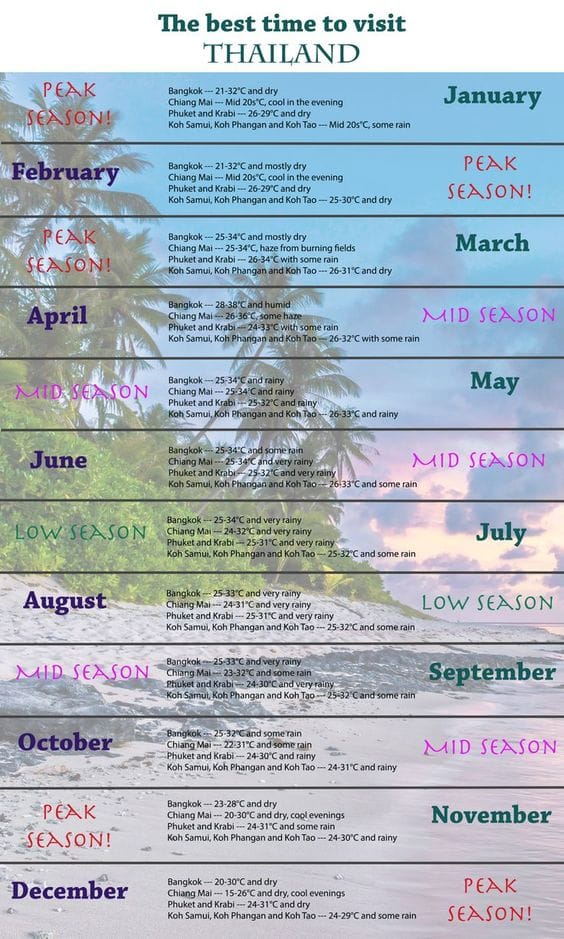
Best Time to Visit Thailand for Beaches and Islands
Thailand’s beaches are world-famous, but not all islands have the same weather patterns at the same time.
Andaman Sea (Phuket, Krabi, Phi Phi Islands)
The best time to visit these destinations is from November to April, when the sea is calm, visibility is excellent, and rainfall is low. This period is ideal for diving, snorkeling, and boat tours.
Gulf of Thailand (Koh Samui, Koh Phangan, Koh Tao)
These islands follow a slightly different weather pattern. The best time to visit is from January to September, with peak rain usually occurring in October and November. This makes the Gulf islands a great alternative during the Andaman Sea’s rainy months.
Best Time to Visit Thailand for Cultural Experiences
Thailand’s cultural calendar is filled with festivals, religious events, and traditional celebrations that add depth to any visit.
Loy Krathong and Yi Peng (November)
These lantern and water festivals are among the most beautiful events in Thailand. Rivers glow with floating offerings, and the sky fills with lanterns, especially in northern cities.
Chinese New Year (January or February)
Bangkok and other cities with large Chinese communities celebrate with dragon dances, fireworks, and street food feasts.
For culture lovers, timing your trip around these events can make the best time to visit Thailand feel truly magical.
Best Time to Visit Thailand on a Budget
If saving money is your main goal, the rainy season is often the best time to visit Thailand. From June to October, travelers can find discounted flights, hotel deals, and tour packages.
While there may be occasional rain-related disruptions, the cost savings and quieter attractions often outweigh the downsides. Budget travelers who don’t mind adjusting plans around weather will find this period especially rewarding.
Best Time to Visit Northern Thailand
Northern Thailand, including Chiang Mai and Chiang Rai, has a slightly cooler climate compared to the south.
The best time to visit this region is from November to February, when temperatures are comfortable for trekking and exploring temples. Avoid March and April if possible, as agricultural burning can cause air quality issues in some areas.
Best Time to Visit Thailand for Food Lovers
Thai food is incredible year-round, but certain seasons enhance the experience. Fresh fruits like mangoes peak during the hot season, while cooler months make street food exploration more comfortable.
Food festivals and night markets are most enjoyable during the cooler months, reinforcing why many consider this the best time to visit Thailand.
Choosing the Right Time for You
The truth is that the best time to visit Thailand is not a single month or season that applies to everyone, but rather a personal decision shaped by your travel style, expectations, and flexibility. Some travelers thrive in the energy of peak season, when the weather is perfect, festivals are in full swing, and the country feels alive with international visitors sharing the same excitement.
Others prefer the quieter rhythm of the rainy season, when Thailand feels more intimate, landscapes are lush and green, and the absence of crowds allows for deeper connections with local culture and everyday life. There are also travelers who don’t mind the heat and see the hot season as an opportunity to enjoy iconic festivals, longer daylight hours, and slightly reduced prices in some destinations. By looking beyond simple weather charts and considering how you like to travel—whether you prioritize comfort, cost, cultural immersion, or spontaneity—you can turn almost any time of year into the perfect moment to experience Thailand. This flexible mindset is often what transforms a good trip into a memorable one.
Final Thoughts: When Is the Best Time to Visit Thailand?
In general, November to February is considered the best time to visit Thailand due to pleasant weather and minimal rain. However, this is also the busiest and most expensive period.
If you want fewer crowds and better deals, consider traveling during the shoulder months of March, May, or October. For budget travelers and nature lovers, the rainy season offers a quieter and greener side of the country that many tourists never see.
Ultimately, Thailand is a destination that welcomes visitors year-round. By aligning your travel goals with the seasons, you can confidently choose the best time to visit Thailand and enjoy a journey that fits your style, budget, and sense of adventure.